


Comprehensive Guide to the Storage and Preservation of Feedstuffs (Corn, Barley, and Soybean Meal)

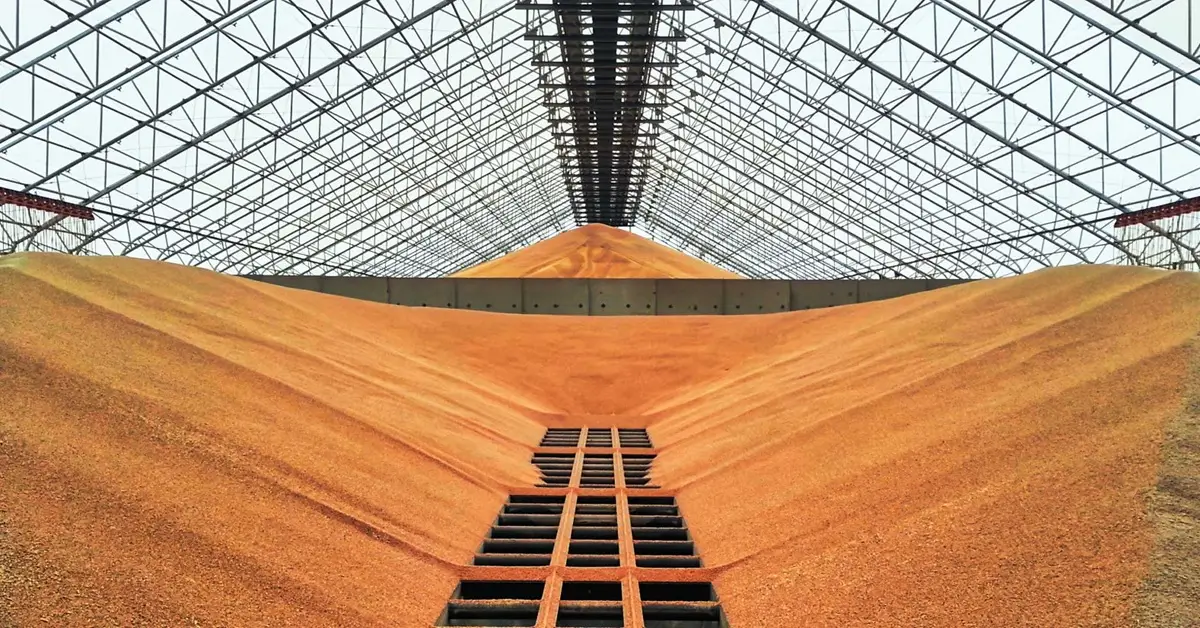
Improper storage of feedstuffs leads to significant economic losses and compromises livestock and poultry health. For instance, losses resulting from storage pests can destroy up to one-third of total stored grains. Proper storage is of double importance, particularly under volatile economic conditions and rising feedstuff prices. Through principled feedstuff warehousing, farm productivity in livestock operations can be enhanced while preserving feed quality.
This article serves as a comprehensive guide to animal feed storage. In this piece, we examine the best practices and key principles for the proper storage of primary feedstuffs, namely barley, corn, and soybean meal.
Insulation and Sealing of Feed Warehouses
The warehouse must be engineered to provide maximum protection against spoilage agents. First and foremost, the facility must be fully sealed and insulated to prevent the ingress of rodents, birds, and insects. Subsequently, the storage area must be kept dry and adequately ventilated.
Preventative disinfection protocols must also be executed. Prophylactic sanitation prevents microbial and fungal growth. Using standard pesticides allows you to prevent the resurgence of pest populations. This phase involves spraying surfaces and vacant warehouse spaces with approved liquid or fumigant insecticides.
Optimal Temperature and Moisture for Feedstuff Warehousing
Preserving quality and preventing spoilage requires storing feedstuffs at appropriate temperature and humidity levels. Moisture is one of the most critical factors in preserving grains and oilseed meals. Moisture content above safe thresholds accelerates grain cellular respiration and rapidly creates favorable conditions for fungal, mold, and insect growth, leading to rapid product deterioration.
- Corn and Barley: For storage exceeding 6 months, moisture content must not exceed 13%. For shorter durations, a 14% moisture level is acceptable.
- Soybean Meal: The ideal moisture content for storing soybean meal is approximately 12%. Exceeding this limit increases the risk of mold and fungal growth.
Temperature is the second key factor in preventing quality loss and feed spoilage. Lower temperatures reduce the biological activity of pests and microbes.
- Corn and Barley: The ideal storage temperature for feed barley and feed corn is a maximum of 15°C.
- Soybean Meal: Soybean meal can be stored at higher temperatures; however, the warehouse must remain cool and dry.
The table below outlines the optimal temperature and moisture parameters for feedstuff storage:
| Feedstuff | Ideal Temperature (Pest Suppression) | Max Allowed Moisture (Long-Term) | Maximum Storage Duration |
| Feed Corn | Below 15°C | 12% to 13% | 12 months (24 months in silos) |
| Feed Barley | Below 15°C | 13% | 12 months (24 months in silos) |
| Soybean Meal | Cool and dry warehouse | Max 12% | 6 months (12 months in silos) |
Layout Principles, Physical Logistics, and Inventory Cycling
Proper physical layout within the warehouse directly influences ventilation, inspectability, and the prevention of floor moisture absorption. To ensure correct arrangement, the following guidelines must be observed:
Utilization of Pallets and Prevention of Floor Contact
Feedstuffs—particularly when bagged—must be stored on pallets. Pallets prevent direct contact with the warehouse floor, which acts as a constant source of moisture and contamination. Plastic pallets represent the optimal choice due to their low wear and tear, zero fire hazard, and ease of sanitization. Furthermore, stacking height should not exceed 10 bags per pallet and must maintain adequate clearance from the ceiling to facilitate optimal airflow.
Compliance with Clearance and Spacing Standard
Maintaining appropriate spacing mitigates moisture risks. It also allows contaminated or burning lots to be easily isolated in the event of pest infestation or fire. Additionally, proper clearance ensures periodic inspections can be conducted with ease. A minimum clearance of 50 centimeters from walls and structural columns must be maintained.
Inventory Management and Lifecycle Cycling (FIFO)
FIFO stands for “First-In, First-Out.” In feedstuff warehousing, the FIFO cycle dictates that older inventory entries must be consumed prior to newer arrivals.
The physical layout specifications and warehouse requirements for feedstuffs are outlined in the table below:
| Warehouse Physical Requirement | Operational Standard | Description |
| No Floor Contact | Use of pallets | Prevents floor moisture absorption and deters pest/rodent nesting |
| Clearance from Walls & Columns | Minimum 50 cm | Ensures air circulation, facilitates inspection, and prevents localized condensation |
| Maximum Stacking Height | Max 10 bags per pallet | Prevents excessive compaction and maintains stack stability |
| Inventory Rotation | FIFO (First-In, First-Out) | Optimizes shelf-life management and reduces spoilage risks |
Pest Management and Mycotoxin Control in Feedstuff Warehousing
Pest and mycotoxin control in a warehouse environment comprises three core components: inspection, hygienic prevention, and, when necessary, targeted eradication.
Identification of Common Pests
Storage pests are traditionally categorized into primary and secondary types. Primary pests, including the lesser grain borer and various weevils (such as the granary weevil), directly attack sound, undamaged grains of feed corn and barley, inflicting severe damage. The secondary effect of these pests is the initiation of fungal spoilage, which causes even greater losses. The metabolic activity of primary pests within grain masses increases localized temperature and moisture levels, creating an ideal environment for mold growth. Consequently, controlling primary pests directly prevents the development of fungi and their associated toxins.
Hygienic Preventative Measures
To prevent the emergence of primary and secondary pests, the following operational steps must be implemented:
- Environmental Disinfection: Thoroughly sanitize and disinfect the warehouse facility immediately after discharging an old consignment and prior to receiving new inventory.
- Physical Isolation: Install appropriate mesh screens and covers over all ventilation fans and air vents to block the entry of primary pests such as insects.
- Waste Material Removal: Cardboard boxes, bags, and wooden crates serve as prime nesting sites for pests. Regularly clear out waste materials, particularly if they exhibit signs of contamination.
Targeted Eradication of Warehouse Pests
Upon detecting pest infestations, immediate remedial action must be taken using three primary methodologies:
- Physical Control: Storage pests—including insects, mites, and fungi—thrive at elevated temperatures. Lowering ambient storage temperatures below 15°C and reducing moisture levels effectively halts their activity and reproductive life cycles.
- Mechanical Control: Employs grain cleaners, mechanical sieves, and suction aspiration systems to physically separate pests, damaged fragments, and contaminated dust from bulk grain masses.
- Chemical Control (Fumigation): If physical and mechanical methods prove insufficient, the facility must be treated using respiratory or fumigant insecticides. Aluminum Phosphide 56% represents one of the most widely utilized chemical compounds for fumigating stored agricultural feedstuffs.
Quality Control Inspection Checklist
Even with proper implementation of storage protocols, periodic inspection and quality control remain mandatory. The inspection checklist for feedstuff warehousing is structured as follows:
- Temperature and Humidity Inspection (Daily): Record and monitor warehouse ambient temperature and relative humidity to ensure optimal ventilation system performance.
- Inventory Inspection (Weekly): Examine bag stacks to detect hotspots, off-odors (indicating microbial activity or rancidity), or early signs of pest infestation.
- Physical Management (Periodic): Verify that pallets maintain a minimum clearance of 50 cm from walls and floors, and ensure inspection aisles remain unobstructed.
- Receiving Control (Inbound Shipments): Audit quality certificates for incoming consignments to confirm moisture levels fall below safe thresholds, and perform rapid testing for aflatoxins (max 25 ppb) and urease activity (for soybean meal).
- Lifecycle Management (Periodic): Inspect and confirm the continuous enforcement of the FIFO system to prevent prolonged storage and shelf-life expiration.
- Pest Control (Monthly): Execute preventative sanitation protocols, perform routine inspections for rodent and insect pests, and prepare for chemical fumigation if deemed necessary.
Frequently Asked Questions (FAQ)
1. What are the ideal temperature and moisture parameters for storing barley, corn, and soybean meal?
Corn and barley exhibit higher sensitivity to ambient heat and moisture; they are best preserved at temperatures below 15°C and moisture levels under 13%. Soybean meal must likewise be stored in a cool, dry environment.
2. Can feed barley, corn, and soybean meal be stored in the same warehouse facility?
Yes, provided they are partitioned into distinct zones with independent ventilation and moisture management to prevent cross-contamination of odors, dust, or moisture migration.
3. How can mold growth in stored feedstuffs be prevented?
By continuously monitoring moisture content, maintaining adequate airflow, utilizing pallets to elevate bags off the floor, and conducting regular inspections to detect early signs of spoilage.
4. What indicators signal spoilage or quality degradation in animal feed?
Sour or musty odors, discoloration, clumping or caking of grains, and excessive dust accumulation serve as primary indicators of feedstuff deterioration.
Conclusion
Proper feedstuff warehousing and inventory preservation require adherence to strict technical standards. Animal feed storage represents a high-risk operational phase where long-term success depends on technical expertise and compliance with international guidelines. Ambient temperature, moisture levels, and pest pressures remain the three decisive parameters governing commodity preservation. Furthermore, strict execution of layout standards—particularly maintaining a 50 cm clearance from warehouse walls—plays a critical role in mitigating moisture buildup and preventing localized mold infestation.
Executing systematic storage practices protects inventory assets, preserves nutritional integrity, and elevates overall livestock operation productivity. Warehousing remains a complex operational process demanding continuous oversight, updated technical practices, and emergency preparedness to minimize inventory shrinkage and economic loss.

